

Fashion in the age of climate change - The Washington Post |
- Fashion in the age of climate change - The Washington Post
- From Timothée To Tevas, 2019’s Best Fashion Moments - Refinery29
- Student fashion line highlights current events - OSU - The Lantern
- Fashion editors beg for 'mindful awareness' from gift-happy brands - Page Six
- Stylists and designers reveal the 11 trends we'll be seeing everywhere in 2020 - INSIDER
| Fashion in the age of climate change - The Washington Post Posted: 18 Nov 2019 07:35 AM PST The companies at the top of the fashion pyramid spent much of the fall previewing their luxury wares for spring 2020 and making their semiannual argument for the value of beauty, craftsmanship, and lots and lots of stuff. In their pursuit of the next new thing to entice consumers, editors and retailers left a giant carbon footprint as they jetted from New York to London, Milan to Paris. Sustainability was not always front of mind for many of them, but it was nonetheless there in the offhand comments about the inherent waste of runway show sets, the luxury market's growing exasperation with fast fashion and the existential angst that fashion was little more than white noise in a cacophonous news cycle. Amid the anxiety, a lot of the clothes presented on the runways and in showrooms were emblematic of ready-to-wear at its most creative and daring, as well as classics of the highest caliber. In Paris, Valentino designer Pierpaolo Piccioli deployed his exquisite eye for color to create Day-Glo gowns that exuded elegance and dresses with fauvist appliqué. At Alexander McQueen, creative director Sarah Burton made a conscious decision to focus on the crafts of dressmaking and tailoring, and to support the small, artisanal textile houses and mills throughout the United Kingdom. Her spring collection was full of intricate embroideries, hand-cut silk organza and crochet. And in New York, Mary-Kate Olsen and Ashley Olsen distilled fashion to its simplest form with a collection of trousers, coats and pristine shirts that ignore the ebb and flow of trends. There's something that recommends all these clothes: beauty, quality, utility. But in the world of everyday consumers, people are asking: Are there any clothes that are both guiltless and desirable? Is it possible to buy fashion that does not imperil the environment? The sustainability puzzle is the problem that affects every corner of the fashion industry. Fashion's global production chain pollutes the environment. Its factories, pushed to their limit, too often abuse an overwhelmingly female workforce. Because fashion's fundamental operating principle rests on planned obsolescence, brands are in a ceaseless cycle of replacement and replenishment. Fashion's job is to goad you into wanting, needing more. None of this is lost on its practitioners. As the industry works to convince consumers that life will be that much better with another pair of special-edition sneakers or a hand-painted party dress, it's also making sustainability part of its business models. The two largest luxury conglomerates, the Paris-based Kering Group and LVMH, have both made commitments to reduce their carbon footprints and their water consumption, better preserve raw materials and improve waste management. LVMH has invested in safeguarding the Amazon and in renewable energy. Kering has made a commitment to being carbon neutral across its supply chain.  Masks: Airinium and Off-White. [Photo by Guerin Blask for The Washington Post.] (Guerin Blask) "When it comes to climate change, we can no longer wait to take real action," said François-Henri Pinault, chairman and CEO of Kering, in a statement this fall. "While we focus on avoiding and reducing our [greenhouse gas] emissions to meet our Science-Based Target, we will offset all our remaining emissions and support the conservation of vital forests and biodiversity around the world." In New York, longtime environmental advocate Eileen Fisher has shared her expertise in circular design with the street style brand Public School. (Her company collaborated with Public School on a collection in 2018.) Designer Gabriela Hearst has shifted to biodegradable packaging and often uses fabric remnants from high-end textile mills in her production to reduce waste. "People say, 'Oh you know we need to save the planet.' No, no, no. Obviously you do not expose yourself to nature," Hearst said to The Washington Post earlier this year. "You think you're going to save the planet? Nature is a natural force. We are going to get exterminated." Consumers are also considering their culpability in the climate crisis. Ask a basic question about how to be a more deliberate shopper and you will quickly learn so few of them have clear-cut answers. Is it better to buy organic cotton or to buy cotton that's grown locally? Organic is generally better. But doesn't cotton production require an overabundance of water? Yes, but only because conventional cotton has been bred that way. Is fake fur a bigger burden on the environment than real fur? No, but you'll still want to consider how that faux pelt is made. Just how bad is cashmere? Well, that's complicated, but wool is arguably a better choice. What about carbon offsets? The math gets a little fuzzy. Because fashion's fundamental operating principle rests on planned obsolescence, brands are in a ceaseless cycle of replacement and replenishment. Fashion's job is to goad you into wanting, needing more. So what should a conscientious fashion consumer consume? The simplest answer to a shopper's dilemma might be a paraphrase of the advice that food writer Michael Pollan offered to those of us perplexed by our mealtime choices: Buy clothes. Not too many. Mostly plant-based. It is possible to buy something as simple as a white shirt, that wardrobe staple, whose production has a minimal impact on the environment and whose manufacture upholds fair labor practices — one that is also stylish. In her recent book, "Fashionopolis: The Price of Fast Fashion and the Future of Clothes," Dana Thomas explores the mess that the industry has made of the environment through its emphasis on disposable fashion and production chains that stretch halfway around the globe. A perfect white shirt, Thomas says in an interview, would be cut from organic cotton so that it could be composted without releasing toxins into the soil. It would have mother-of-pearl buttons, no plastic collar stays, and it would be roomy enough to be worn with its shirttails hanging but sleek enough to tuck into a pencil skirt. Thomas, who is based in Paris, believes that she has found something very close to the perfect white shirt — one that she has worn in front of audiences as she has embarked on a book tour because she knew that the first question people would ask would be: What are you wearing? She has favored a white cotton shirt from Stella McCartney, a brand that was built on the idea that luxury fashion can also be gentle on the environment and that eschews both fur and leather. Thomas's shirt cost about $550. She recognizes that most people can't afford to spend hundreds of dollars on a white shirt, and that even those who can pay that much often refuse to do so. But shoppers should understand that sustainability is about more than just the cost of the raw materials used by a clothing company, says designer DooRi Chung, who teaches fashion design at Marist College in New York. "It's about the supply chain," Chung says, and that includes "how you treat your workers." If the fashion industry paid factory workers for the true value of their labor and was as mindful of its environmental footprint as it should be, Thomas says, then several hundred dollars is precisely what a high-quality white shirt should cost. But instead of buying 10 shirts, customers should simply buy one. This argument is not new, but Thomas underscores our outsize consumption habits by pointing to the fact that we have been enabled by clothing prices that have never been lower. The original Diane von Furstenberg wrap dress, which appeared on the cover of Newsweek in 1976 and was hailed as fashion salvation for working women, was priced at about $75. That translates to about $340 today — a dollar figure that would make a lot of women balk. But a shopper today doesn't even have to spend that much on a wrap dress. She can buy a new one for only $248. At full price. In the 1950s, a man's suit cost around $45. That's the equivalent of about $430 today. A shopper can walk into H&M and buy a suit in the men's department for a mere $105. Zara has them for $150. One from J. Crew totals $428. Again, that's all at regular prices. And in a retail environment when every day there's a discount, who pays full price anymore?  Mask: Marcelo Burlon County of Milan. [Photo by Guerin Blask for The Washington Post.] (Guerin Blask) Since the post-World War II years, the price of clothing relative to the median household income has fallen while prices for housing, health care and cars have risen. Clothing prices, to be sure, are not the only items to become less expensive: Food prices have fallen significantly in the past 30 years, particularly the cost of beef, chicken and pork. Part of that drop is because the meat industry has become more industrialized and consolidated — and like the fashion industry, relies on cheap labor. Electronics have become dramatically more affordable as well. But unlike with clothes, few people have closets stuffed with iPhones. The average consumer buys 60 percent more clothing today than 15 years ago, according to the "State of Fashion 2019" report by McKinsey & Co. and the trade publication the Business of Fashion. And so, instead of two adults comfortably fitting their entire wardrobe in one of those modest prewar closets, folks now require walk-in closets the size of studio apartments just to store a wardrobe of shoes. We are clothing gluttons. Even people who say they don't care about fashion still have drawers overstuffed with T-shirts, jeans and hoodies. In fact, folks who shop for basics may be the worst offenders of all. Their castoffs aren't going to consignment shops or vintage stores. They aren't outlasting their first owner and being passed along as an heirloom. They're going into landfills. Each complicated answer eventually spirals down to consumption. The simplest, best path to sustainability is not anti-fashion; it's anti-gorging. And yet, the same youthful consumers who came of age in the era of Instagram and who consider clothing old after only a couple of wearings are among the most attuned to environmental and social issues. They want guilt-free newness. That contradiction suggests that perhaps it's best to search for that perfect white shirt in a consignment shop or through a digital resale merchant such as the RealReal. That would certainly reduce one's personal environmental impact. Or maybe the ideal answer is to rent it. The success of the sharing economy certainly attests to people's enthusiasm for this option. But renting clothes does little to wean us off the belief that newness is next to godliness. And as Thomas says, these rented garments must be constantly dry cleaned, packaged and shipped. While companies can employ green dry-cleaning processes and limit packaging, the clothes still have to travel miles upon miles from one renter to the next. "It works better on a local scale rather than a global one because of the carbon footprint," Thomas says. A small rental company can make its deliveries by foot or by bicycle. But then, would the cost to the customer tick up enough that it would make better economic sense to simply buy? And if we're all furiously renting and consigning, aren't we still enabling our gluttony? Maybe just buy less. That's what each complicated answer eventually spirals down to: consumption. The simplest, best path to sustainability is not anti-fashion; it's anti-gorging. The most sustainable white shirt may be cut from locally grown, organic cotton. It may tick all the boxes for fair labor practices and a minuscule carbon footprint. But the best white shirt — the perfect shirt — is the one that a shopper buys and wears for years. It's the singular shirt that stands in lieu of a dozen cheap ones. It is the shirt that hangs, uncrowded, in a room the size of a closet. Robin Givhan is The Washington Post's fashion critic. Stylist: Rika Watanabe. Photo Editor: Dudley M. Brooks. Design and Development: Emma Kumer.  |
| From Timothée To Tevas, 2019’s Best Fashion Moments - Refinery29 Posted: 18 Nov 2019 03:22 PM PST 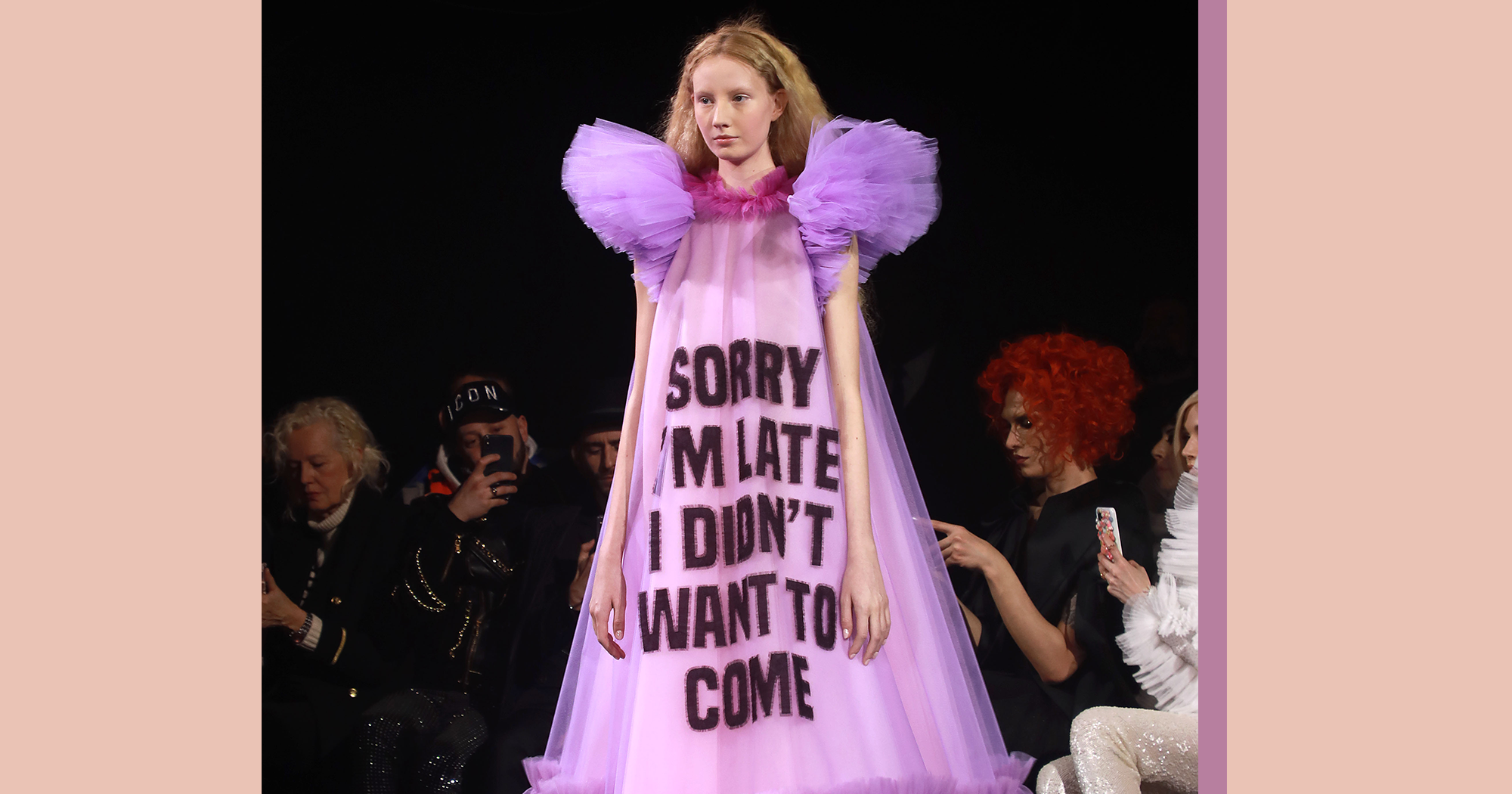  |
| Student fashion line highlights current events - OSU - The Lantern Posted: 18 Nov 2019 07:02 PM PST 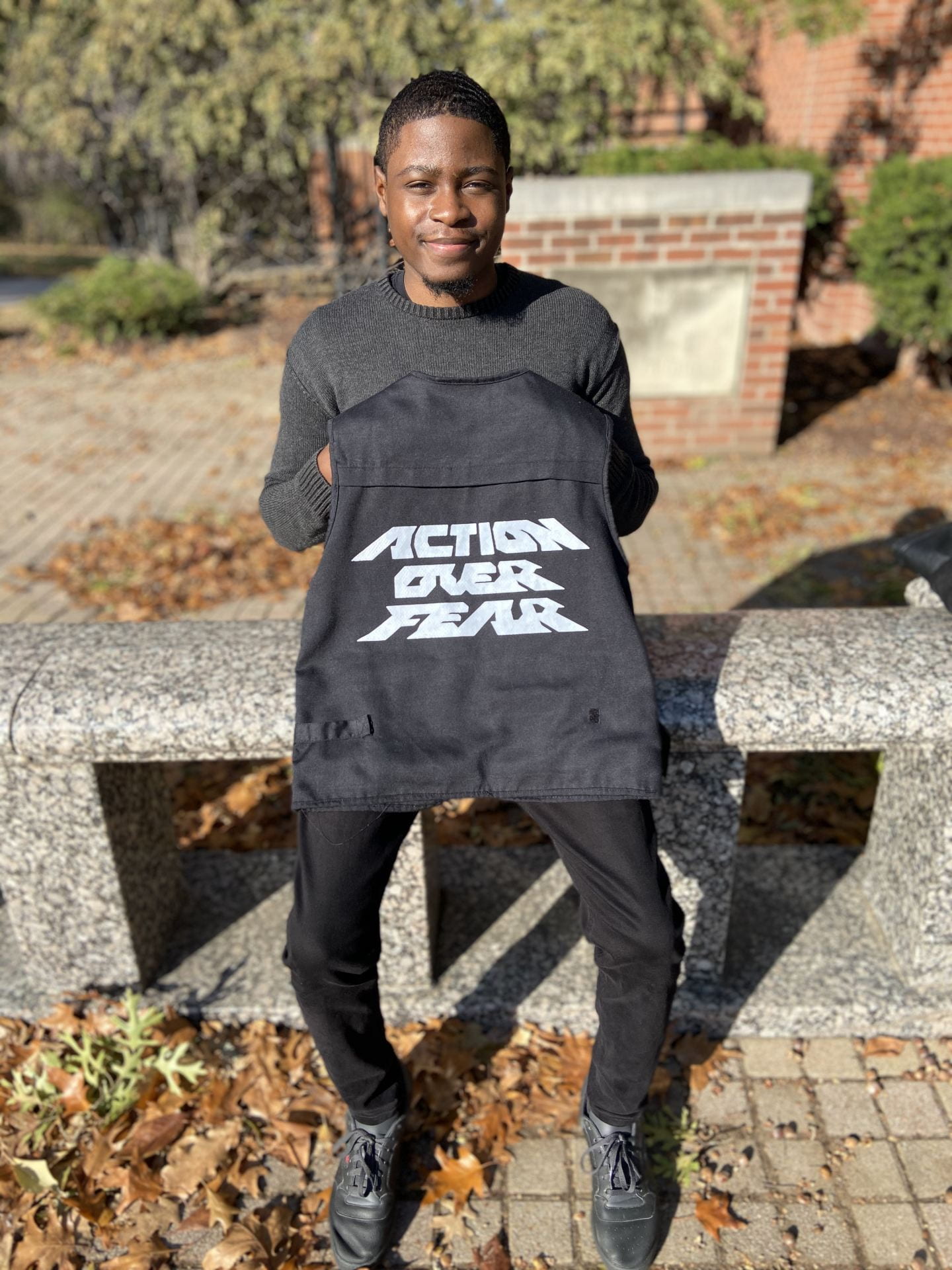 Jackson Edwards, a fourth-year in fashion retail studies, recently launched a vest collection for his clothing line Action & Smoak. Credit: Micahiah Brown-Davis | Lantern Reporter Moving from communication to fashion, Jackson Edwards' decision to follow his dreams led to more than a changed major. Edwards, a fourth-year in fashion retail studies, is the founder of Action & Smoak, a clothing line featuring T-shirts, jackets, hats, sweaters and vests. In 2016, Edwards transferred to Ohio State from Raritan Valley Community College in New Jersey, where he majored in communication. He said that after having a conversation with his father about what he wanted to do in life, he changed his major to fashion retail studies. "I wasn't sure about the OSU fashion major, but it turned out to be the best decision of my life," Edwards said. "Changing my major actually made my life much easier. I found myself more excited to learn, whereas in the past I had a hard time studying because I didn't have a passion for what I was learning." Edwards said his fashion designs are a reaction to current events in the world, meant to inspire people not to fear what they put their mind to. The clothing line's logo was designed when Edwards noticed a lack of black animated characters in cartoons, he said. The logo — a smiling black boy with a yellow straw hat, dreadlocks and eyes covered by the letter X — is inspired by "One Piece," a Japanese anime following the adventures of a boy and his pirate crew. "I sketched out the design and had a graphic designer complete it," Edwards said. "I began studying fashion and the history. I was so interested in the industry that I found myself staying up late at night thinking I could really see myself doing this." He said his designs symbolize a reaction to modern times, something he said a lot of clothing lines are not doing today. Edwards said that in October, he launched a new vest collection, which features a black-and-red cotton vest with the words "Action Over Fear" on the back. He said he chose those words to inspire people to take control of their path in life and do what they want to do without being fearful. The vests are currently available for purchase for in-person delivery for $40 or $50 through the mail, Edwards said. Edwards started selling crew neck sweaters in fall 2018, and they sold out. The black sweater featured two white hands puppeteering the word "Politics" in red, white and blue. He said he wanted to show how in the past there have been different laws placed on black people preventing them from moving forward, which is still a problem in today's politics. Simon Asem, a fourth-year in city and regional planning and co-founder of his own clothing line, CA Clothing Group, said he and Edwards connected through their mutual business ventures. "His politics sweater is a popular and controversial piece. If you can't make a statement, you can't captivate people," Asem said. "During the time when he released the line, there was a lot going on within the government, and I think the design makes you think about the meaning behind it." Edwards said he has grossed more than $3,500 from his clothing line and is constantly trying to improve his products. "I hope to see him enter another realm of clothing. With a logo as interesting as his, he can really find a way to expand in gaming. His logo is not only a logo — it's a character," Asem said. Edwards said he hopes his clothing will resonate with others. "If you were to ask me my freshman year if I'd be an entrepreneur, I would've definitely said no," Edwards said. "I didn't know how to design. I did a lot of research, watched a lot of interviews and seen what was missing in my community." Action & Smoak products are available for purchase through social media, in person or at actionsmoak.bigcartel.com.  |
| Fashion editors beg for 'mindful awareness' from gift-happy brands - Page Six Posted: 18 Nov 2019 07:20 PM PST A group of fashion editors has taken a brave stand to save the planet — by asking luxury brands to let them pick their own Christmas gifts. The journalists have posted a manifesto on Instagram that reads: "In an effort to reduce excess, we, in the fashion community, are seeking a mindful awareness this holiday season (and beyond!). We urge PR agencies and brands to refrain from blind gifting and using excessive 'unboxing' materials."  The band of eco-warriors suggests it might be best for, you know, the sea otters, if editors could instead pick their own gifts, or as they put it in the note, be offered "choice of product." A cynic might read all this as: "Just send us the Cartier, but you can skip the festive popcorn gift sets this year." But we at Page Six salute their selfless crusade (even though careful readers might notice that nowhere in the social media post does it suggest that all the brands skip the gifts entirely and give a donation to, say, Greenpeace instead). Given the fuss about the environmental impact of cow farts, perhaps the editors could just do their bit for the planet by ceasing to release so much hot air into the atmosphere.  |
| Stylists and designers reveal the 11 trends we'll be seeing everywhere in 2020 - INSIDER Posted: 18 Nov 2019 08:15 AM PST 
Fashion trends come and go and as 2019 comes to a close, new designs are on the rise and some older styles are coming back. To get a preview of what's to come in 2020, Insider spoke to stylists and designers about their predictions for the trends we'll be seeing everywhere next year.  |
| You are subscribed to email updates from "fashion" - Google News. To stop receiving these emails, you may unsubscribe now. | Email delivery powered by Google |
| Google, 1600 Amphitheatre Parkway, Mountain View, CA 94043, United States | |


0 Yorumlar